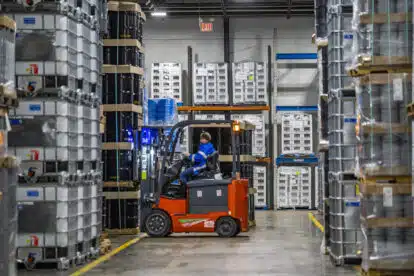
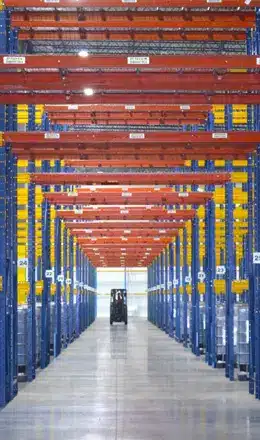
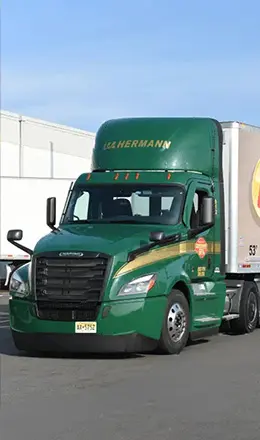






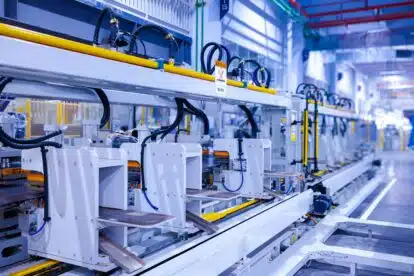

We operate up to 2 million square feet of warehousing space throughout the Northeast and Southwest.
 Author : Hermann Services
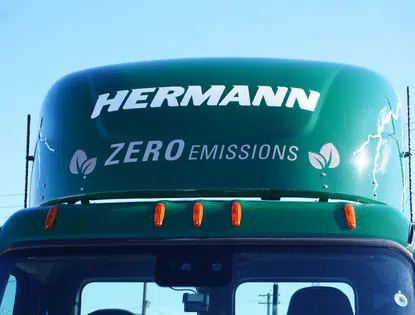
At Hermann Services, we’ve been navigating the road to sustainable logistics solutions for quite some time. Our experience utilizing renewable diesel transportation across our facilities and operating what will soon be the largest electric truck fleet in New Jersey has taught us that the path to zero-emission trucking isn’t one-size-fits-all. Understanding the trade-offs between fuel alternatives is critical to implementing effective green freight solutions.
The environmental impacts of different truck power sources vary significantly in sustainable logistics. One gallon of traditional diesel produces approximately 23 pounds of CO2 emissions, whereas renewable diesel reduces this to just 8 pounds per gallon—a 65% reduction. Electric vehicles produce zero emissions when powered by renewable electricity, making them the gold standard for zero-emission trucking.
Achieving sustainability in logistics shouldn’t be siloed to picking the option that produces the least carbon emissions. Each alternative to traditional diesel presents distinct operational challenges, infrastructure requirements, and cost considerations that demand careful evaluation when implementing sustainable supply chain transportation.
Renewable diesel is made from organic materials such as soybeans or canola oil grown specifically for fuel, as well as byproducts like cooking oil or animal fats from meat processing. This practical application has been demonstrated in various contexts, including early adopters who successfully converted waste cooking oil into viable fuel sources.
Renewable diesel is chemically similar to petroleum diesel, requiring no modifications to existing engines or fuel systems. This compatibility enables seamless fleet integration, providing operational simplicity and a cost-effective sustainability enhancement with minimal price premium—making it an attractive option for companies beginning their sustainable logistics journey.
The primary challenge with renewable diesel transportation remains availability. Unlike conventional diesel, renewable diesel is not widely available at commercial truck stops, complicating route integration for sustainable 3PL providers. Most procurement requires direct supplier relationships and tanker delivery to your own facilities, which means being limited to your own location to fuel up with renewable diesel.
At Hermann, our corporate office is strategically located next to a fuel supplier that offers renewable diesel, allowing our dedicated fleet to fuel directly at their station. This access remains limited and represents a primary adoption barrier for cleaner fuel alternatives in the logistics industry.
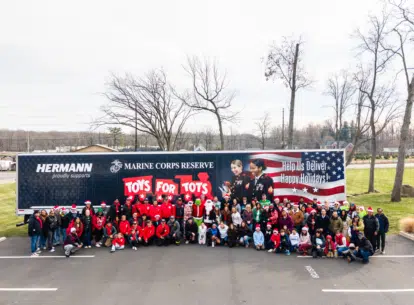
This initiative falls under Hermann Cares, our philanthropic arm dedicated to supporting community outreach programs and charitable organizations that align with our core values, a tradition of corporate social responsibility that traces back to our founders, Fred J. and Myrtle Hermann, in 1927.
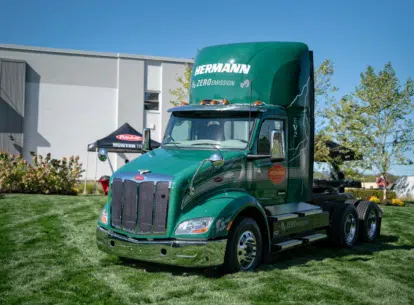
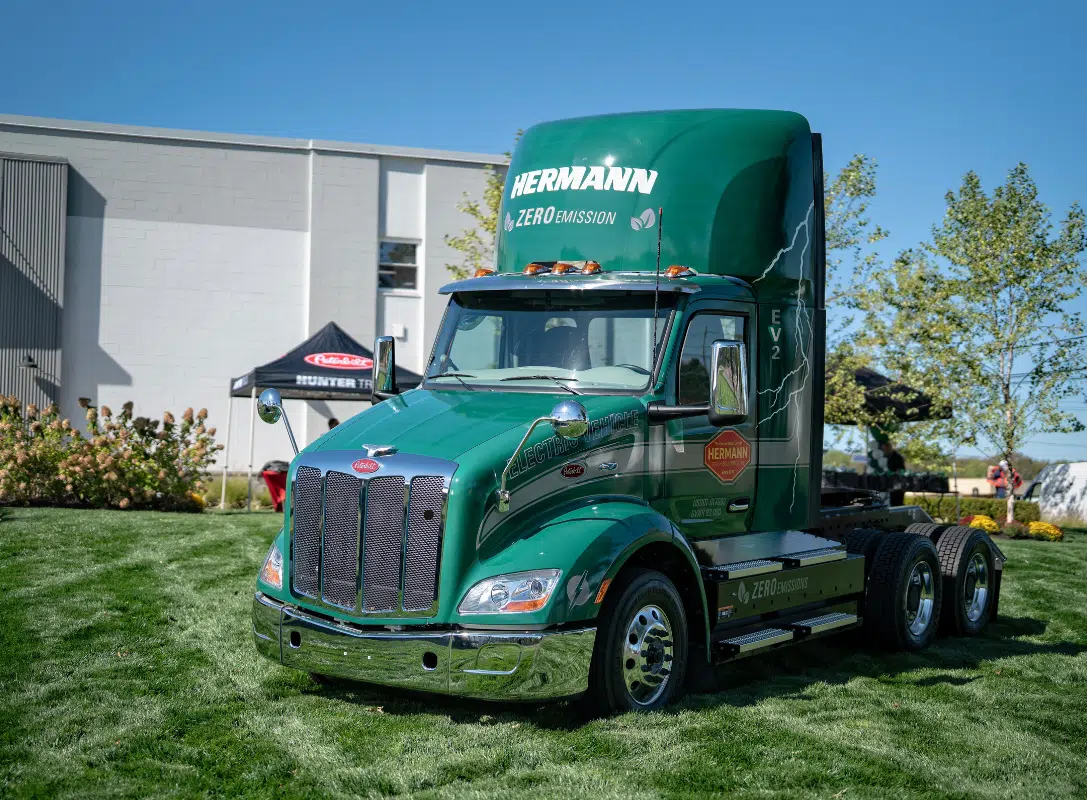
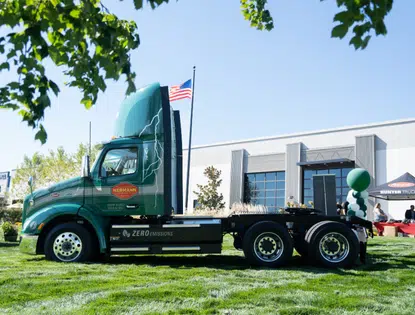
Our experience operating Freightliner and Peterbilt electric trucks has provided invaluable insights into the benefits and challenges of zero-emission trucking operations and finance.
Current commercial electric trucks offer 200-230 miles per full charge, although this depends heavily on temperature, load weight, terrain, and driving style. Regenerative braking—when an electric engine battery captures more charge when braking—can extend mile range when drivers learn to maximize their energy recovery. However, this variability requires careful route planning for electric truck fleet management.
While the mile capacity is ideal for short hauls in sustainable logistics, it poses a serious challenge for longer routes where not all stations have battery charging options. In an industry where speed directly impacts profitability, this variability represents a significant operational risk. Additionally, depending on the charging station’s infrastructure and availability, charging can take anywhere from 1.5 to 4 hours.
The most glaring barrier to zero-emission trucking: cost. Electric trucks cost approximately three times what diesel trucks cost. Without grants and incentives from federal, state, and local programs, fleet electrification is not financially viable in the short term for most sustainable 3PL providers. Companies typically operate EV trucks at a loss for several years before realizing profitability through reduced operating costs
While these costs present a substantial challenge for most companies, Hermann views sustainability as a necessary and never-ending journey. We believe that the long-term impact of zero-emission vehicles far outweighs some of the short-term losses. This is why we’ve shown our commitment and dedication to our community and customers by purchasing 15 brand-new EV trucks from Peterbilt.
These trucks are ideal for our short-haul operations and regional distribution routes for dedicated lanes—the sweet spot for electric truck fleet management. To address charging infrastructure gaps, we’re installing four permanent charging stations at our headquarters powered by clean energy sources such as solar panels and windmills. While the upfront investment is substantial, we believe this is the right investment for our community, our customers, and our planet’s future.

The key takeaway: the road to sustainable logistics solutions is not easy, but it is necessary.
Understanding the challenges and benefits of each alternative to traditional diesel fuel is crucial to skillfully implementing them within your operations and mitigating obstacles.
Infrastructure planning must precede vehicles. Bringing electric trucks into your fleet without mapping out charging routes and/or having stations at your facilities only creates operational havoc. Electrical capacity planning, permitting, and station placement must happen months before vehicle deployment—a critical lesson for any sustainable 3PL provider.
Comprehensive driver training proves essential to maximizing EV performance in zero-emission trucking. Drivers need to be knowledgeable about range management, regenerative braking, and charging protocols as they switch from diesel to electric. Drivers well-versed in these techniques and principles can extract significantly better performance and value from electric vehicles.
Route optimization is fundamental to successful green freight solutions. EV planning must account for electric range, charging availability within the route, payload effects, and even temperature. Traditional fuel sources offer more flexibility, as these variables rarely constrain operations.
Renewable diesel transportation requires similar route planning considerations. Route planning depends on fuel availability. Renewable diesel will not be readily available along all routes. For dedicated lanes, it’s necessary to plan around locations where you can access renewable diesel; however, this means advance planning and potentially limiting routes until availability improves in more areas.
Pre-established fuel supplier partnerships are critical for sustainable logistics solutions. Securing reliable renewable diesel access requires establishing relationships with suppliers willing to deliver via tanker or finding the rare fuel stations that stock it—a key differentiator for sustainable 3PL providers.
These are pressing issues when it comes to transportation sustainability, and we must navigate around them strategically. Technology continues to evolve rapidly. Organizations beginning their sustainability initiatives today have access to improved technology at more competitive prices than those available even two years ago. While infrastructure improves and price gaps narrow, the imperative remains clear: sustainable logistics requires immediate investment, not deferred action.