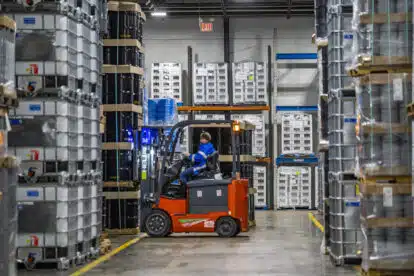
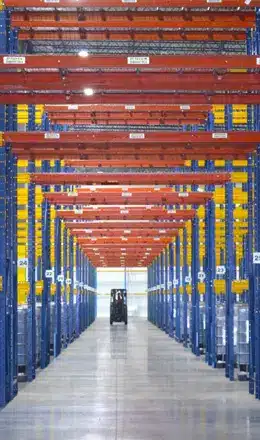







We operate up to 2 million square feet of warehousing space throughout the Northeast and Southwest.
 Author : Hermann Services

The truth is, strong carrier-broker relationships don’t happen by chance—they’re built on trust, communication, and consistency. Whether you’re an independent owner-operator or managing a small fleet, understanding how carriers work with freight brokers can transform your business and help you navigate the challenges of today’s freight market.
As trucking industry trends point toward cautious stabilization in 2026 after years of volatility, the carriers who thrive will be those who invest in meaningful broker partnerships. If you’re looking to become a preferred carrier partner, here are seven strategies we’ve seen work time and time again:
Nothing beats clear, timely communication. Brokers love carriers who keep them in the loop—whether it’s confirming pickup, sharing transit updates, or flagging an issue early. A quick call or message can turn a potential problem into a smooth solution.
Strong communication means proactively sharing ELD data, providing realistic ETAs, and never going dark between pickup and delivery. When you’re transparent about delays or challenges, brokers can manage customer expectations and find solutions together with you. This builds the foundation of trust that leads to repeat business.
On-time pickup and delivery aren’t just metrics—they’re the foundation of trust. When you consistently hit your commitments, brokers notice. It’s the simplest way to earn repeat business.
According to industry benchmarks, carriers achieving a 95%+ on-time delivery rate significantly increase their partnership opportunities with brokers. Top-performing carriers understand that reliability matters more than speed—meeting promised delivery windows builds a reputation that opens doors to premium loads and consistent freight.
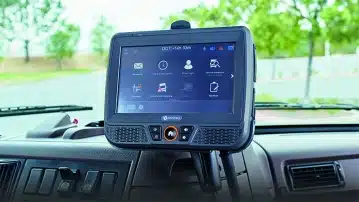
Visibility matters. Using tracking tools or ELD integrations makes life easier for everyone. When brokers can see where their freight is without chasing updates, you become a go-to carrier.
Modern logistics optimization tools—from GPS tracking to transportation management systems (TMS)—help carriers demonstrate professionalism and reliability. Brokers value carriers who embrace technology because it reduces their administrative burden and improves customer satisfaction. The investment in tracking technology pays for itself through stronger partnerships and more consistent load offers.
Fast, accurate documentation—PODs, invoices, compliance forms—speeds up payment and reduces headaches. Organized carriers make brokers look good to their customers, and that’s a win-win.
Stay current on DOT regulations, maintain proper insurance certificates, and ensure your MC authority documentation is always up to date. Carriers who handle compliance requirements professionally create fewer operational friction points. Transparency builds trust in freight brokerage—learn more about how legitimate brokerages operate to understand the partnership from both sides.
Don’t just move the freight—connect with the people. Ask about future opportunities, seasonal needs, or how you can help them succeed. Brokers remember carriers who invest in the relationship.
The best carrier-broker relationships go beyond individual loads. Share your availability in advance, communicate your preferred lanes, and be honest about your equipment capabilities and limitations. When you help brokers plan their capacity needs, they’ll prioritize you for the loads that fit your business best. Long-term partnerships create stability in an otherwise volatile market.
Things happen on the road. Weather delays, breakdowns, last-minute changes—how you respond matters. Brokers value carriers who stay calm, adapt quickly, and focus on solutions.
The freight market in 2026 continues to face challenges including capacity adjustments, regulatory changes, and ongoing freight market volatility. Carriers who can pivot when plans change—whether that means adjusting routes, accepting alternative pickup times, or working through unexpected delays—become invaluable partners. Flexibility isn’t about accepting every challenge; it’s about clear communication and solution-oriented problem-solving when issues arise.
Got specialized equipment? Regional expertise? Hazmat certification? Let brokers know! Your unique capabilities can make you their first call for certain loads.
Whether you operate flatbeds for oversized cargo, temperature-controlled reefers, or have specific industry certifications, make sure your broker partners know what sets you apart. Carriers with niche capabilities or strong regional knowledge—especially in high-demand areas like the Texas-to-Northeast corridor—can command better rates and more consistent freight. Don’t be shy about highlighting what makes you different.
As the trucking industry enters 2026, strong carrier-broker relationships have become more critical than ever. After a prolonged freight recession marked by excess capacity and suppressed rates, industry forecasts point toward gradual stabilization—but meaningful recovery won’t arrive overnight.
Current trucking industry trends show capacity slowly tightening as carriers reduce expansion and focus on equipment replacement rather than fleet growth. For-hire carriers continue operating under margin pressure, making strategic partnerships with reliable brokers essential for survival and growth. The carriers who will thrive aren’t necessarily the ones with the lowest rates, but those who build relationships based on trust, reliability, and mutual success.
Strong broker partnerships help carriers weather freight market volatility by providing access to more consistent freight, better lanes, and loads that match their equipment and expertise. When capacity tightens—as industry analysts predict for mid-to-late 2026—carriers with established broker relationships will have first access to quality loads at competitive rates.
For carriers operating routes between Texas, the Northeast (New Jersey, Pennsylvania), Arizona, and Florida, partnering with regional brokers who understand these lanes creates competitive advantages. Local market knowledge, established shipper relationships, and geographic expertise all contribute to smoother operations and better profitability for both carriers and brokers.
The bottom line: In a market defined by uncertainty, strong relationships provide stability. Carriers who invest in broker partnerships today position themselves for success when market conditions improve.
At Hermann, we believe strong carrier-broker relationships are the backbone of successful logistics. For 98 years, we’ve built our brokerage on partnerships that work—better loads, smoother operations, and stronger businesses across Texas, New Jersey, Pennsylvania, Delaware, Arizona, and Florida.
We don’t just tell the story of great carrier partnerships—we write it together with carriers like you. As an asset-based broker with nearly a century of experience, we understand both sides of the relationship. We know what it takes to move freight reliably, and we respect the hard work that carriers do every day.

Ready to join our carrier network? Contact us at carrierdevelopment@hermanntds.com.
If you’re already part of our network, help us grow by sharing this article with other carriers
in your network who value relationships over transactions.
Let’s keep building on nearly 100 years of experience—together.